
Blog.
Looking at Sites from a New Perspective
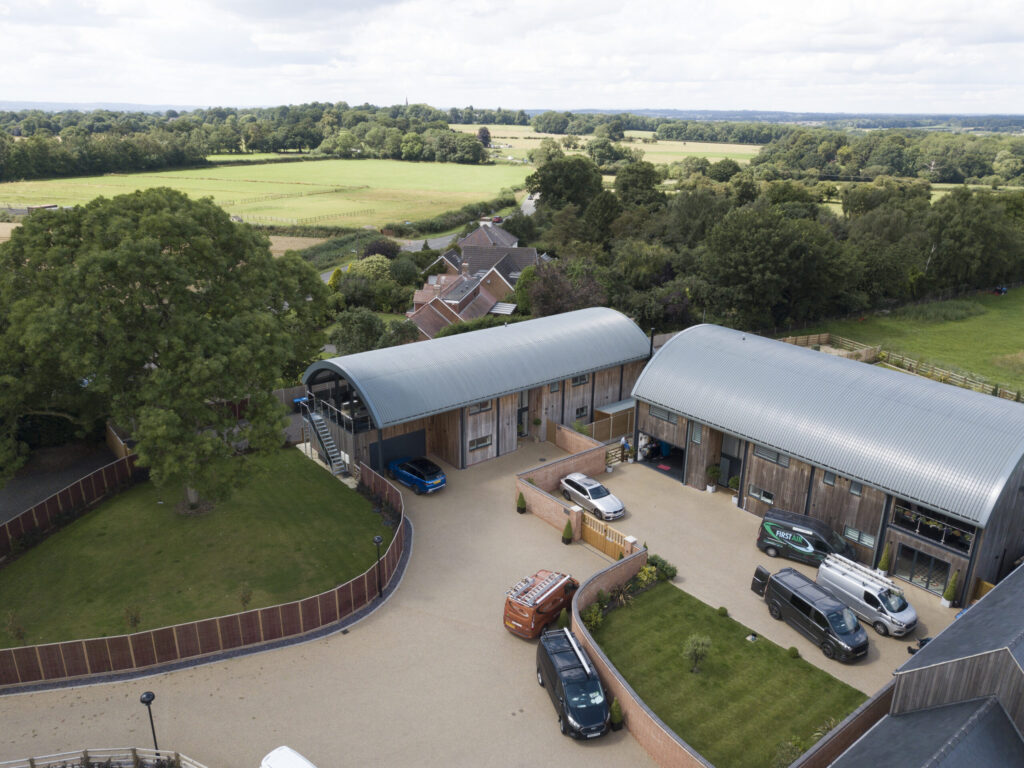
Before designing anything, you need to get to know the site properly. Usually that means a few site visits, photographs, and whatever drawings or surveys you can get hold of. Drones don’t replace any of that, but they do add something useful—an aerial view that captures everything in context.
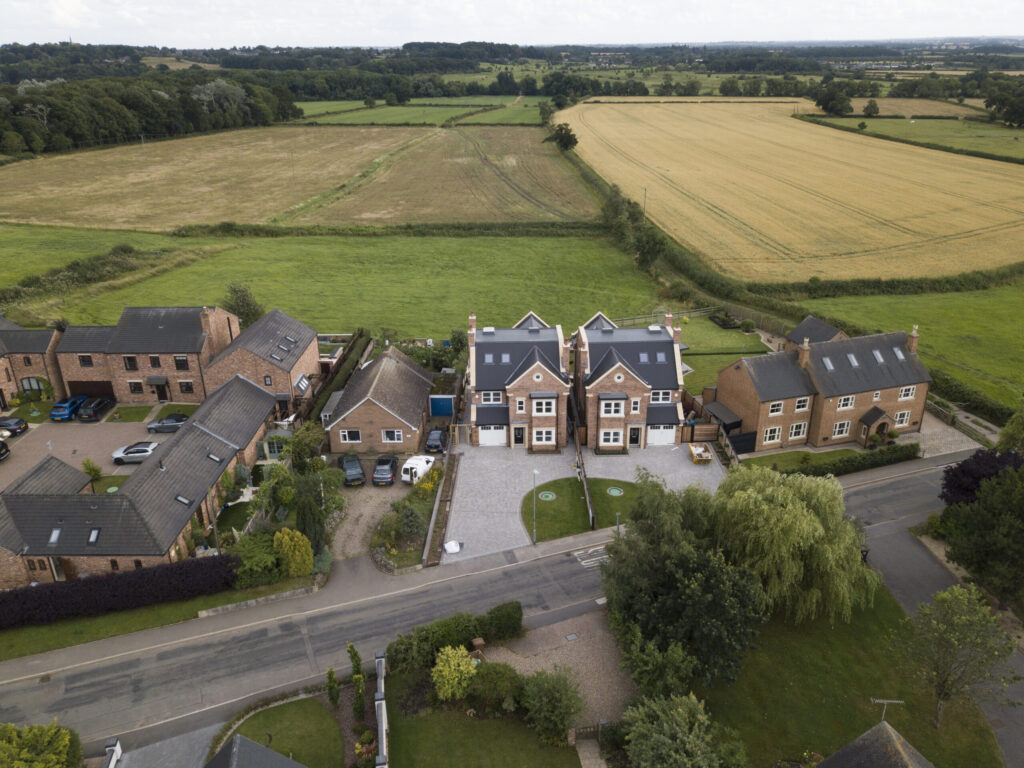
Using a drone, you can quickly see how a building sits in relation to its neighbours, the shape of the land, roof conditions, and even trees or boundaries you might otherwise miss. It gives a broader understanding of the space, especially on tricky plots or larger sites.
Quicker, Clearer Surveys
With the right setup, drones can be used to create orthographic maps, surface models, or even 3D scans of a site. It’s a much faster way to gather information compared to traditional surveying methods—sometimes cutting the time down from days to hours.
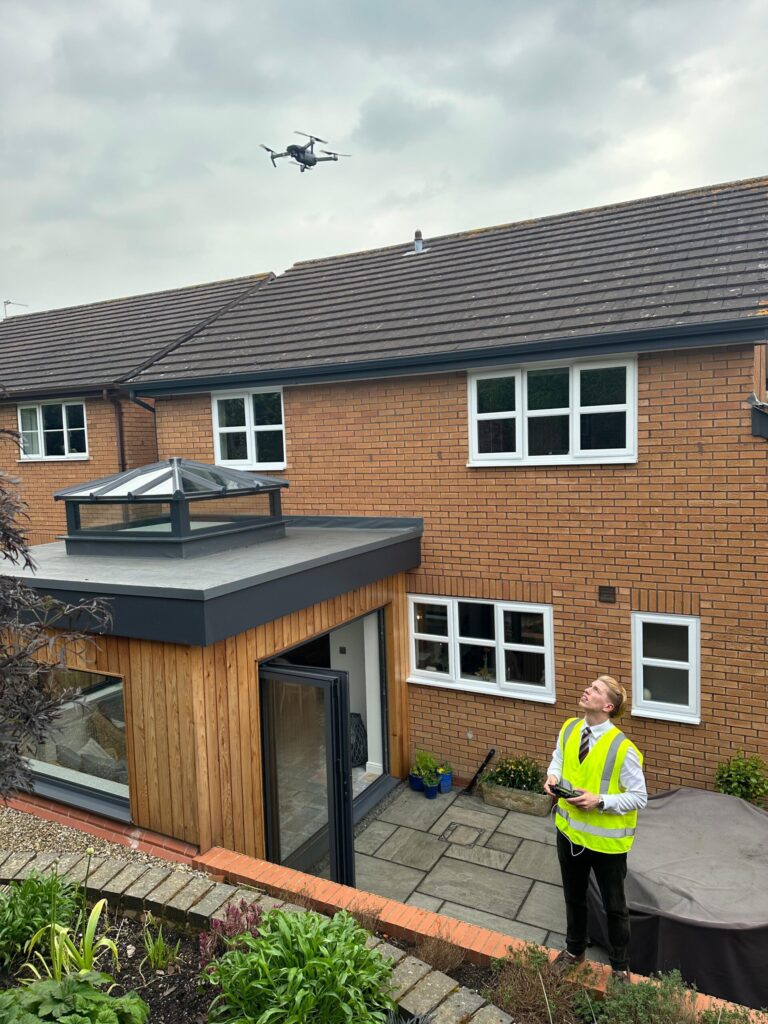
It’s also a great tool to check roofs, especially on existing buildings where access might be limited. A simple flyover can save time (and avoid the need for scaffolding) when all you need is clear imagery for reference.
Helping with Planning and Presentations
One of the biggest benefits of drone photography is how easy it makes it to communicate a design. Rather than just handing over a site plan or elevation, aerial shots let people actually see the bigger picture. Planning officers, neighbours, or clients can get a feel for how the proposal sits within the wider area.
It’s also handy for adding into reports, planning packs, or early-stage presentations—especially if you’re trying to show relationships to nearby buildings, open space, or roads.
Aerial imagery can also be used to produce photomontages—real-world visuals that combine proposed designs with drone photography. This is especially helpful when communicating a scheme’s visual impact to stakeholders, planners, and the public. Seeing a development inserted into an actual photo of the site can help contextualise scale, form, and material choices.
Safer Site Inspections
Drones also offer a safer way to inspect areas that would usually need special access—like roofs, chimneys, or the upper parts of taller buildings. It means you can get a closer look without putting anyone at risk or needing extra kit on site.
Some drones even have thermal imaging attachments, which can help with detecting heat loss or damp issues. That’s especially useful when working on retrofit or sustainability-focused projects.
Where It’s All Heading
Drone use in architecture is still developing, but it’s becoming more common every year. There’s talk of more automated workflows, better links to BIM software, and even AI-based analysis tools being built into drone software.
For now, though, even a simple camera drone can massively improve how architects look at, plan, and present their work.
Final Thoughts
While drones bring many benefits, there are some important limitations to be aware of. In the UK, commercial drone use requires the operator to have a valid licence—such as the CAA A2 Certificate of Competency—as well as insurance.
There are also restrictions on where drones can fly. Areas around airports, military sites, and some city centres are designated as no-fly zones, and operators must always keep a safe distance from people, property, and residential areas unless special permissions are in place.
Understanding these rules is key to using drones safely and legally in architectural practice.
As someone still early in their architecture journey, I’ve found drones to be a surprisingly useful addition to the design process. Whether it’s capturing a tricky site layout or getting photos for a planning report, the flexibility and speed of drones makes a real difference.
They’re not replacing the fundamentals of good architecture—but they’re definitely becoming part of how we practise it.
To take a look at the rest of the IMA team Click here